Jul 24, 2026
The Smart Ring Revolution
The global smart ring market is booming in 2026. Discover why these tiny wearables are outperforming smartwatches, tracking sleep and health , and how to choose the right one.
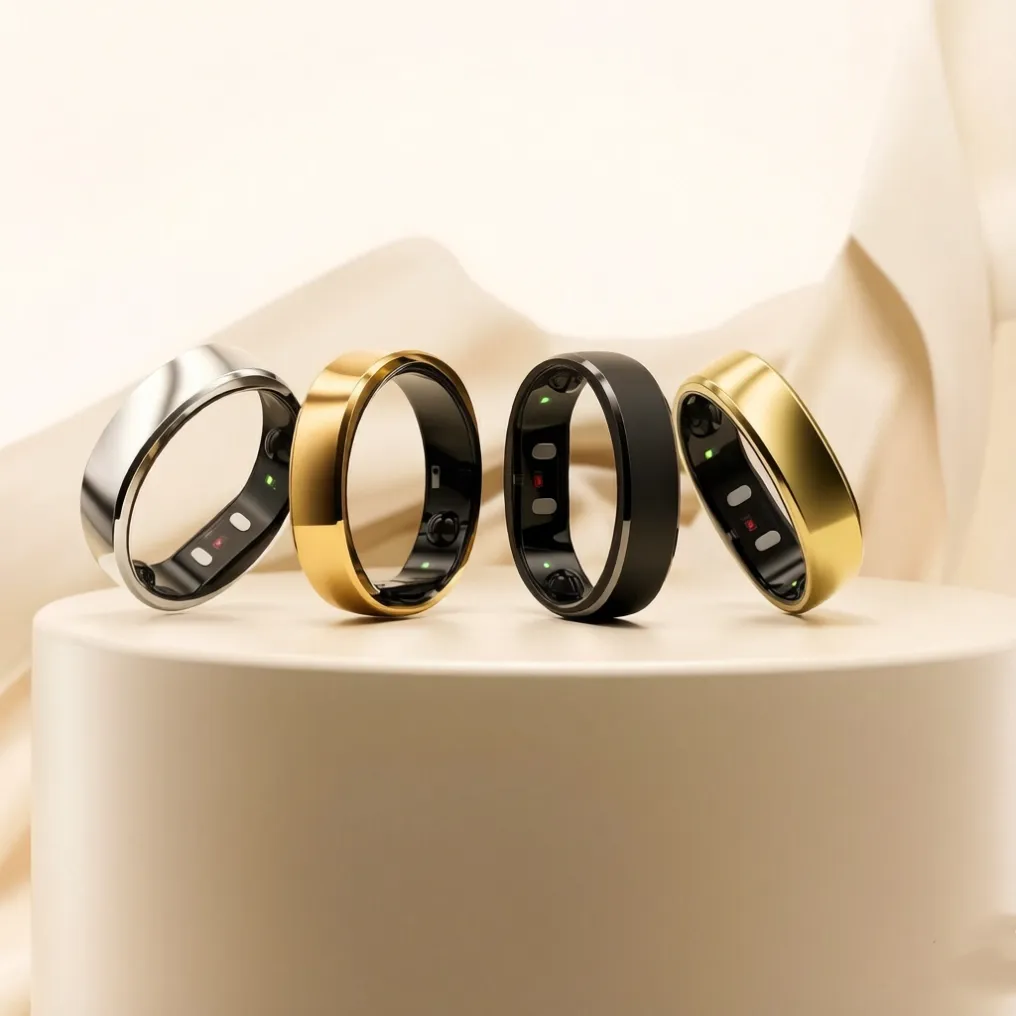
The Smart Ring Revolution: Why 2026 Is the Year to Wear Your Health on Your Finger
The global smart ring market is booming in 2026. Discover why these tiny wearables are outperforming smartwatches, tracking sleep and health with medical-grade accuracy, and how to choose the right one.
For years, smartwatches have dominated the wearable technology landscape. But a quiet revolution has been happening on our fingers. Smart rings — small, elegant, and powerful — are emerging as the next frontier in personal health technology. In 2026, they are no longer a novelty. They are becoming the preferred choice for millions of people around the world who want to track their health without the bulk of a wrist-worn device.
The Numbers Don't Lie: Smart Rings Are Taking Off
The smart ring market is experiencing explosive growth. According to industry reports, the global smart rings market was valued at approximately USD 697.6 million in 2025 and is projected to grow to USD 1.01 billion in 2026, reaching an astonishing USD 7.8 billion by 2035 at a compound annual growth rate of 25.4%. Other forecasts suggest even more aggressive growth, with the market expected to expand from USD 518.9 million in 2026 to USD 3.77 billion by 2034, representing a CAGR of 29.30%.
What is driving this remarkable growth? Nearly 58% of users now prefer discreet alternatives to wrist-based devices, and continuous health monitoring accounts for roughly 55% of overall usage. Sleep and recovery tracking drives nearly 47% of demand. The message is clear: consumers want health tracking that fits seamlessly into their lives — not another screen demanding their attention.
What Exactly Is a Smart Ring?
A smart ring is a wearable device worn on the finger that uses advanced sensors to monitor various health and fitness metrics. Unlike traditional fitness trackers, smart rings are designed for 24/7 wear, providing continuous data collection without interruption.
Modern smart rings pack an impressive array of technology into a tiny form factor. They typically include optical heart rate sensors, accelerometers, skin temperature sensors, and blood oxygen (SpO2) monitors. Advanced models can track:
· Heart rate and heart rate variability (HRV) – with accuracy approaching medical-grade devices
· Sleep quality and sleep stages – including deep sleep, REM, and light sleep
· Body temperature – detecting changes as small as 0.13°C
· Blood oxygen levels (SpO2)
· Activity and movement – steps, calories, and workout detection
· Stress levels – through HRV analysis
· Women's health – including menstrual cycle tracking and perimenopause insights
Smart Ring vs. Smartwatch: Why the Ring Is Winning
The debate between smart rings and smartwatches has intensified in 2026. While both devices track many of the same health metrics, they serve fundamentally different purposes.
The Oura Ring wins at identifying long-term health trends and flagging subtle changes related to illness, recovery, or cycle tracking. Its subtle design and week-long battery life mean it fades into the background, which makes consistency easy. This is critical because consistent data is the foundation of meaningful health insights.
The main benefit of a smart ring is less disruptive sleep tracking. Many users find smartwatches uncomfortable to wear to bed — they are bulky, have bright screens, and require nightly charging. A smart ring, by contrast, is comfortable enough to wear 24/7, allowing for uninterrupted sleep tracking.
According to industry analysis, the current trend is not one product replacing the other, but rather the two being used together: relying on the smart ring for round-the-clock continuous monitoring, while using the smartwatch for workout needs and message handling.
The Latest Innovations: Oura Ring 5 and Beyond
2026 has been a landmark year for smart rings. Oura, the category leader, unveiled the Oura Ring 5 — a device that is 40% smaller than its predecessor while maintaining up to a week of battery life. The new model features 12 stronger signal pathways for more accurate readings across different finger types and skin tones.
The Oura Ring 5 introduces Health Radar, a feature that continuously monitors biometric signals to identify patterns that may warrant attention, particularly pertaining to blood pressure signals and nighttime breathing. The ring also gives wearers a 30-day view of their respiratory health by tracking breathing regularity and sleep-related disturbances.
Accuracy improvements are substantial. Oura reports that the Ring 5 delivers 12% more accurate overnight HRV than the Ring 4, with a 24% improvement in signal quality for workout heart rate — translating to a 19% increase in accuracy for activities like running, cycling, and walking.
What to Look For in a 2026 Smart Ring
If you are considering joining the smart ring revolution, here are the key factors to evaluate:
- Sensor Accuracy
Look for rings with multiple optical sensors and proven accuracy. More signal pathways generally mean better readings across different skin tones and finger types.
- Battery Life
Most premium smart rings offer 6–9 days of battery life. Some newer models, like the Sharp Karada Mate Ring, promise up to 14 days.
- Subscription Model
Some brands require monthly subscriptions for full access to health insights. Others offer all features without ongoing fees. The Oura Ring 5 starts at 499 for premium finishes, with a monthly subscription for advanced features.
- Design and Comfort
Smart rings come in various materials including titanium and ceramic. Choose a design that fits your style and is comfortable for 24/7 wear.
- Water Resistance
Look for IP68 ratings or 100-meter water resistance if you want to wear your ring while swimming.
- Compatibility
Ensure the ring works with your smartphone — most support both iOS and Android.
The Bottom Line
The smart ring market is projected to reach 7.8 billion by 2035, and for good reason. These tiny devices represent a fundamental shift in how we approach personal health monitoring — moving from reactive to proactive, from disruptive to seamless, from data overload to actionable insights.
Whether you are a fitness enthusiast, a busy professional, or someone simply looking to understand your body better, 2026 is the year to consider wearing your health on your finger. The smart ring revolution is here, and it is only just beginning.